A practical guide to choosing an ERP for your online store in Egypt
If you are searching for a system to run your online store, you have probably reached the point where spreadsheets are no longer enough. This guide explains how to decide in practical terms, which indicators to track, and the mistakes that cost store owners the most.
Why does a store need an ERP and not only accounting software?
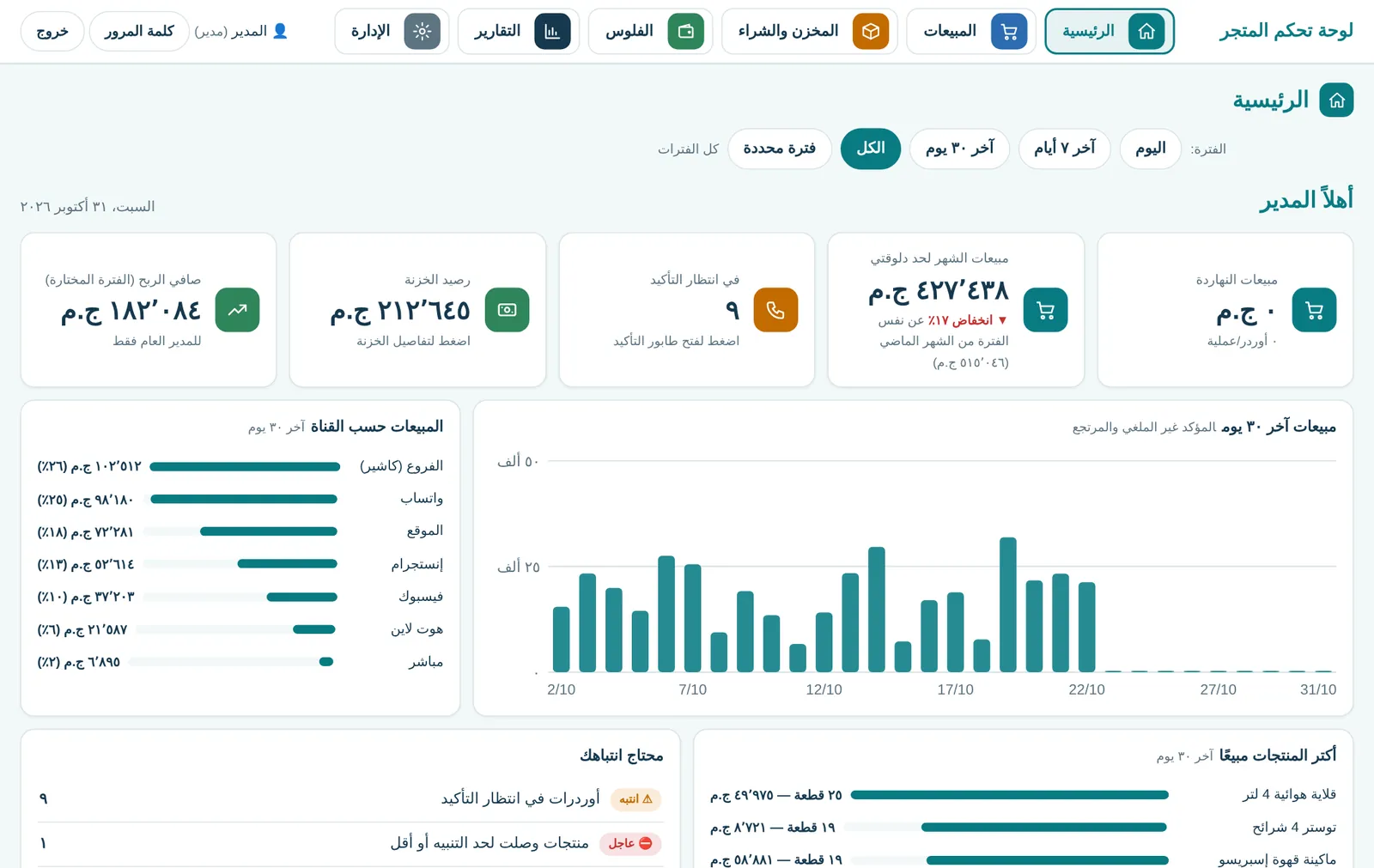
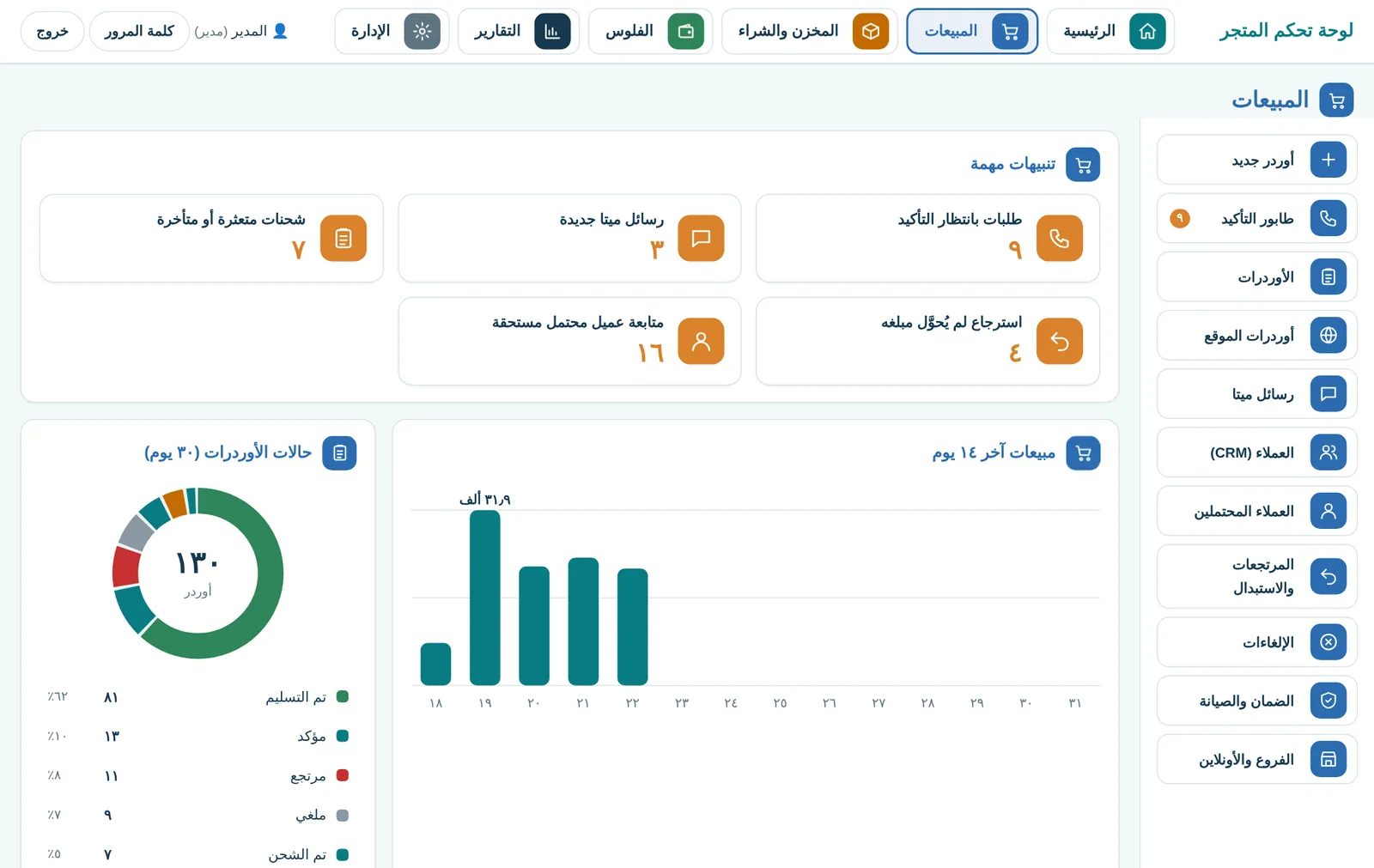
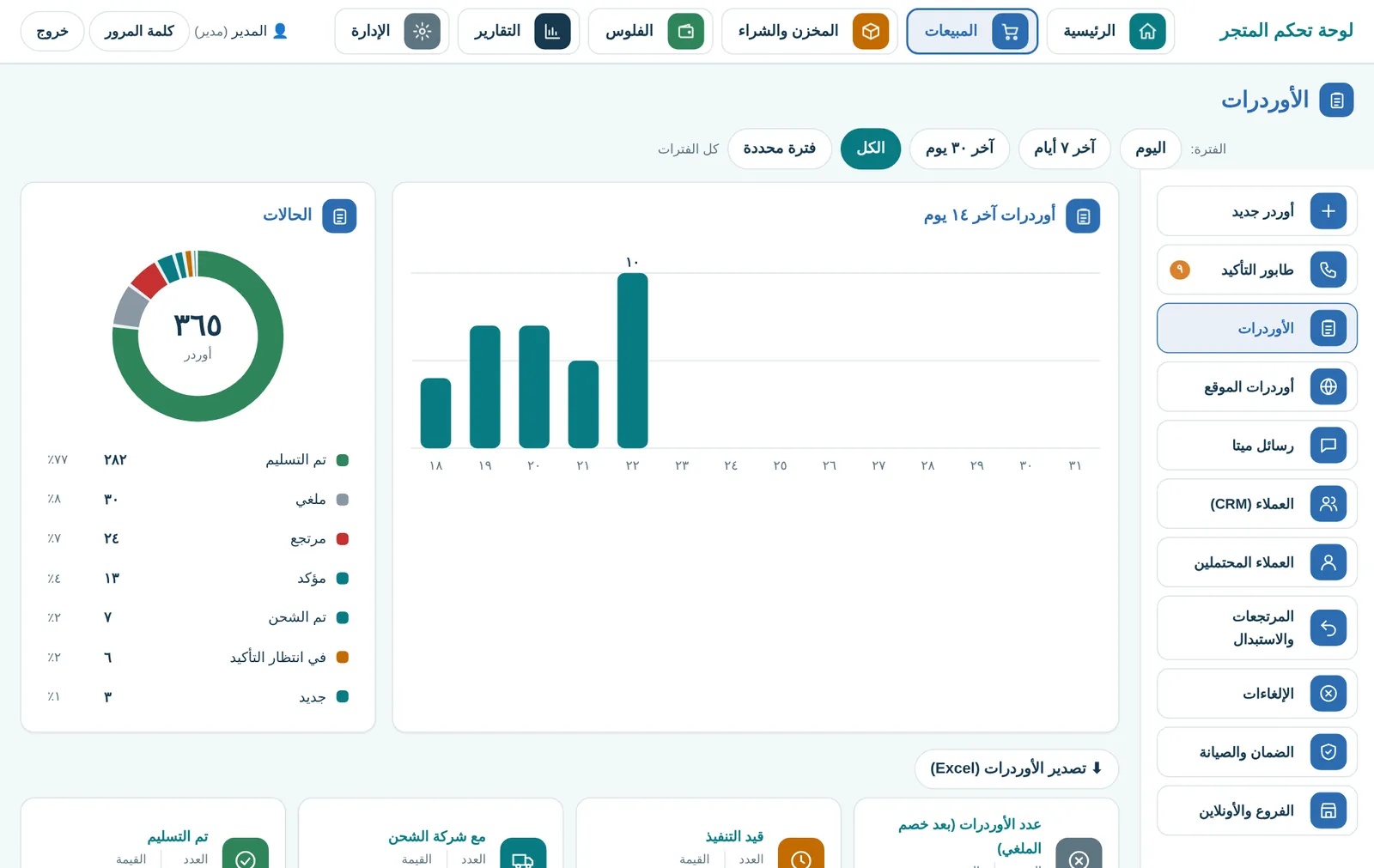
Accounting software records money after it moves. The problems of online stores happen before that: an unconfirmed order, inaccurate stock, a delayed shipment, a return nobody logged. An e-commerce ERP manages the whole journey from order to ledger, so it prevents losses instead of only recording them.
Seven criteria for choosing an online store management system
- A direct integration with your store platform (WooCommerce or another) with no manual re-entry of orders.
- An order confirmation queue for the call center that records the employee name and cancellation reason.
- Support for couriers in Egypt, cash-on-delivery tracking and returns.
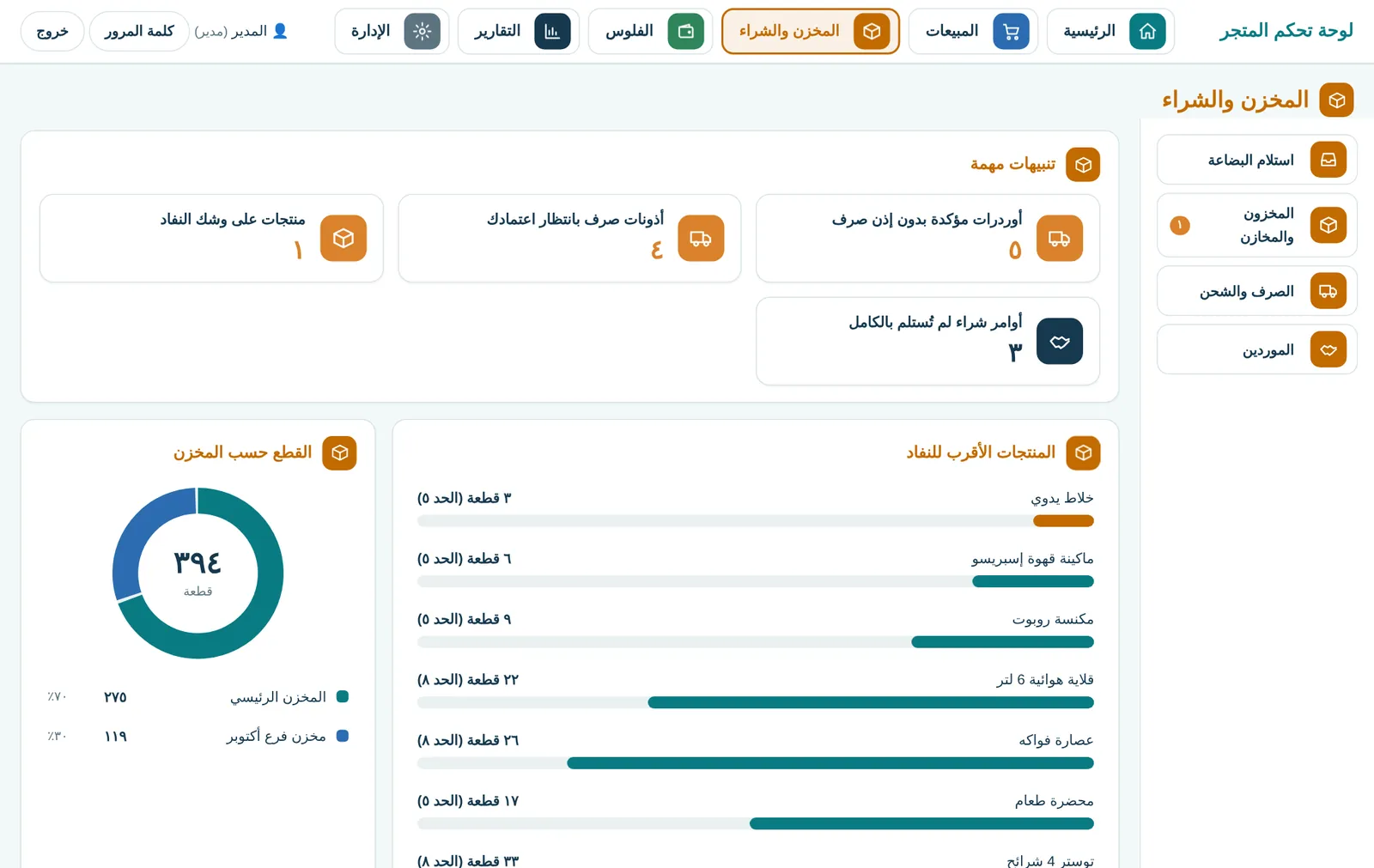
- Multiple warehouses and branches, with a dispatch permit before goods leave.
- Real permissions: who sees purchase price and profit, and who does not.
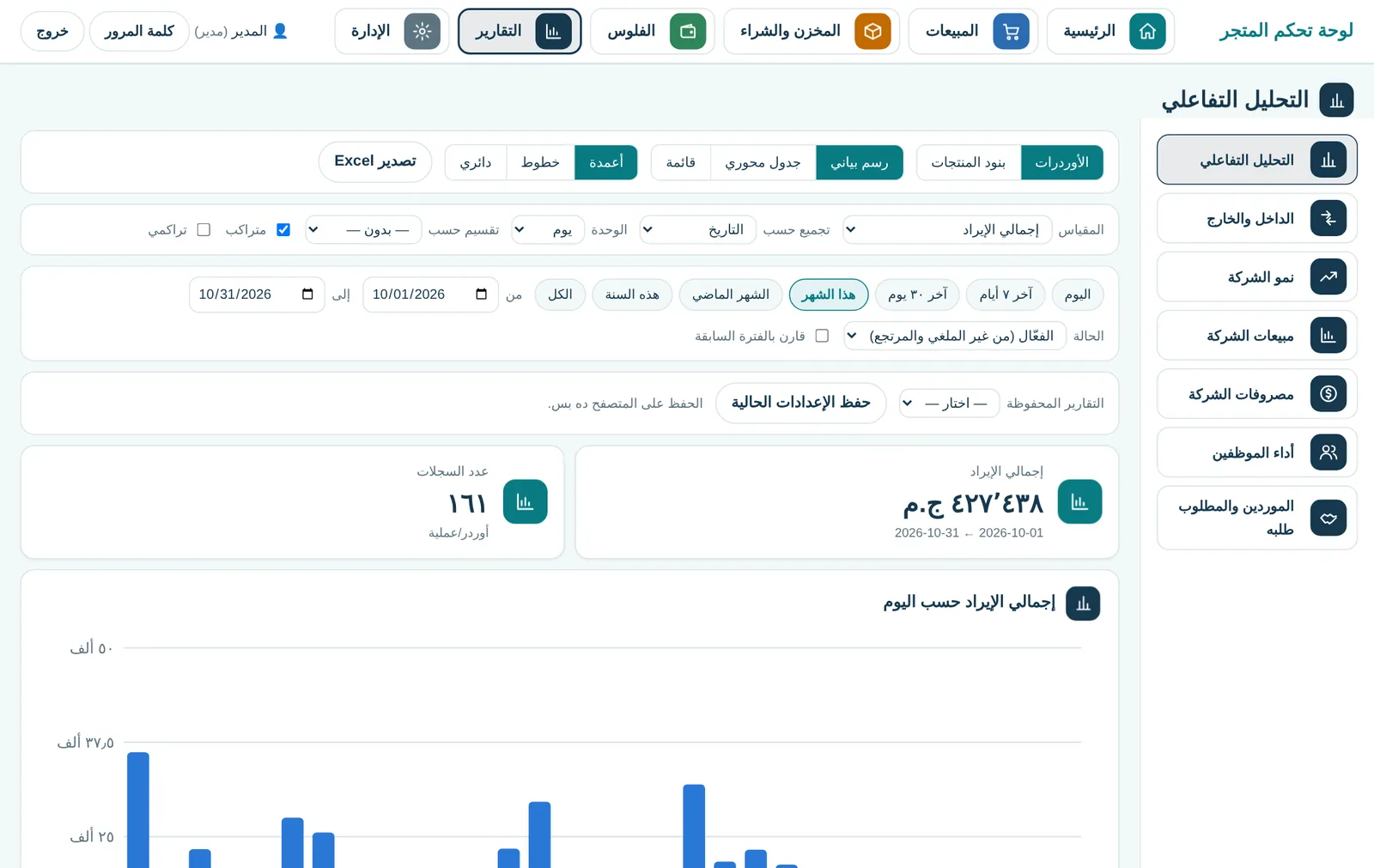
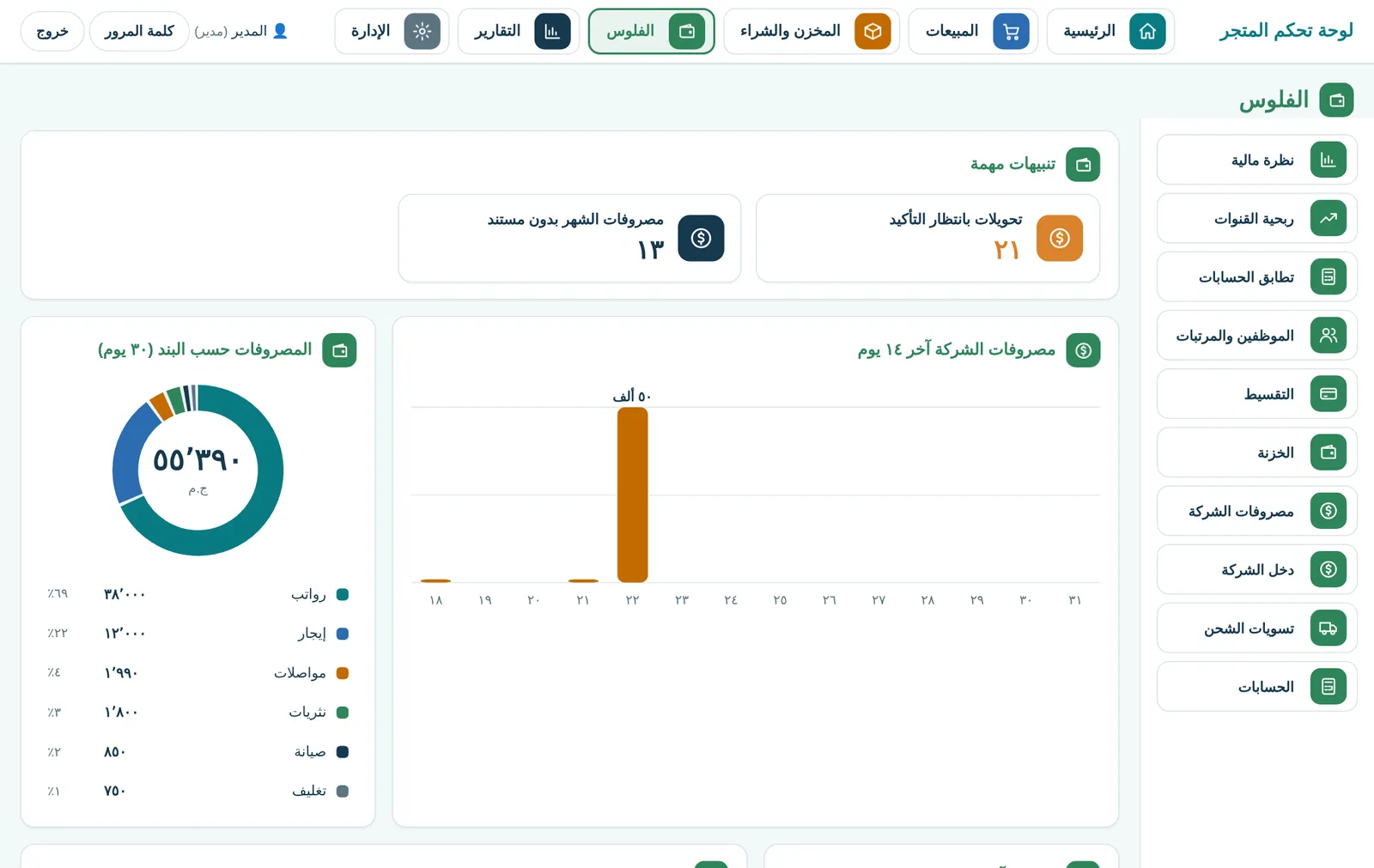
- Profit reports after shipping, returns and expenses, not just sales.
- A clear Arabic interface and a support team that answers in Arabic.
Indicators to review in your store every week
- Confirmation rate = confirmed orders / all new orders.
- Delivery rate = delivered orders / shipped orders.
- Return rate = returns / delivered orders.
- Net profit per order = selling price - product cost - shipping - its share of ads and expenses.
- Cash held by couriers and the average time to transfer.
- Items close to running out, and slow-moving items.
Stores that review these weekly spot a problem such as rising returns on one product or a slow confirmation channel before it becomes a large loss.
Common mistakes that cost store owners money
- Shipping orders before the customer is confirmed, then paying outbound and return fees.
- Selling a product that is actually out of stock because a branch warehouse is not updated.
- Not linking real shipping cost to the order, so profit looks higher than it is.
- Letting every employee see the purchase price.
- Postponing stock counts until differences become large.
How to roll the system out without stopping work
Start by moving products and customers from spreadsheets, run the confirmation queue first, then enable dispatch permits and shipping, and finally accounts and reports. Your team learns in stages and no working day stops. This is exactly how we do it for clients at Nibras Media, with online training and 90 days of support after handover.